
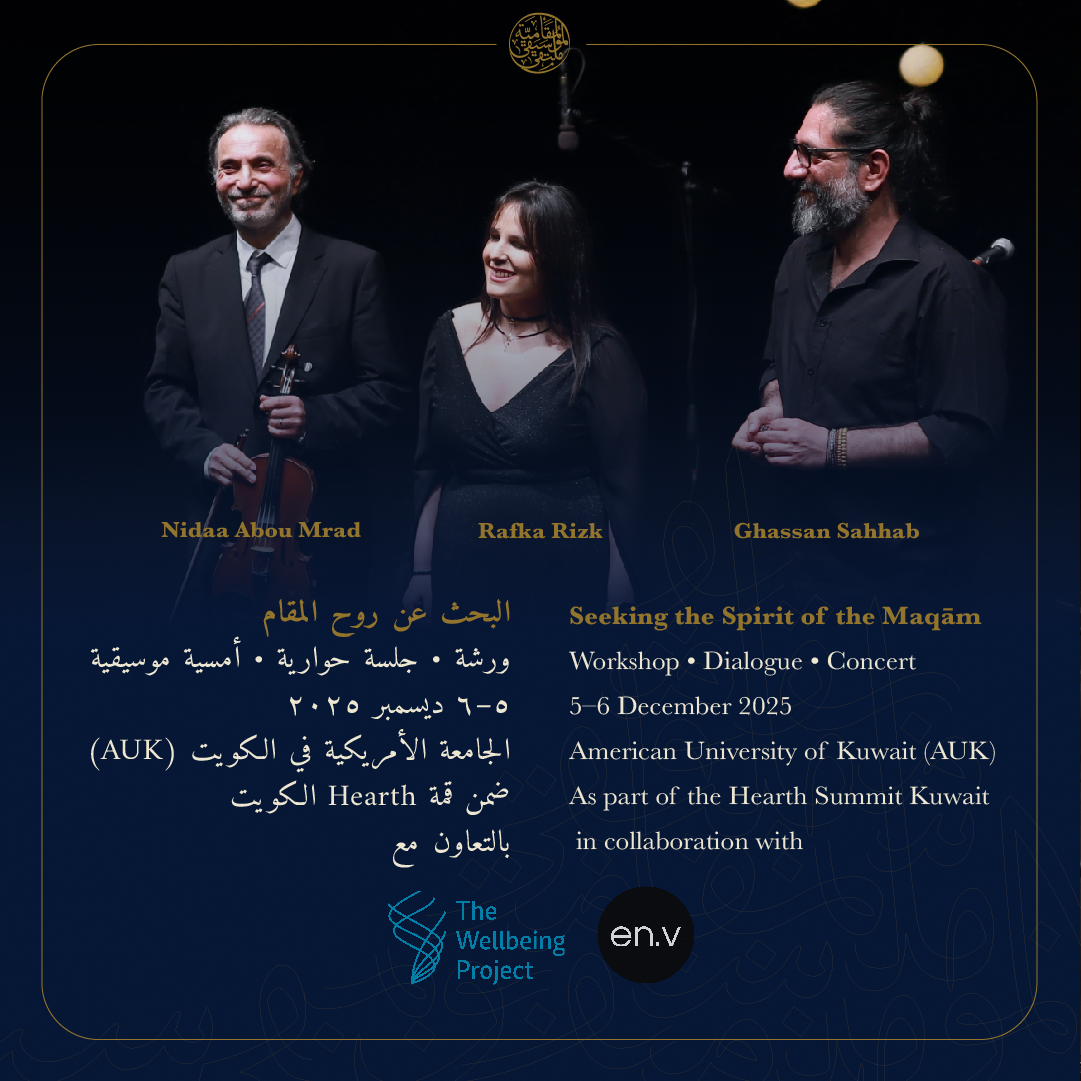
Workshop • Dialogue • Concert
Seeking the Spirit of the Maqām
An Introductory Workshop to the Modal Music of Western Asia and Its Spiritual & Healing Virtues
A program thoughtfully selected and curated by Professor Nidaa Abou Mrad.
Maqām Festival at the Hearth Summit, Kuwait
As part of The Wellbeing Project, in collaboration with en.v
American University of Kuwait (AUK)
Professor Nidaa Abou Mrad
(Sorbonne Université (Paris), Antonine University (Lebanon) and Maqām Festival (Multaqā Al-Mūsīqā Al-Maqāmiyya)
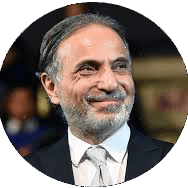
MD and PhD in Musicology, currently Senior Professor of Musicology, Neuropsychology of Music and Music Therapy at Sorbonne Université (Paris), Institut de recherche en Musicologie (UMR 8223) and coordinator of the international scientific network “Music, neuroscience and therapy” at the Collegium Musicæ, Sorbonne Université, at the same time as the Dean of the Faculty of Music and Musicology and the Director of the Research Centre for Music Traditions at the Antonine University (Lebanon), the editor in chief of the peer reviewed journal titled Revue des traditions musicales, the coordinator for the development of new school education programs in Lebanon (Center for Research and Educational Development) and the scientific and artistic director of the Maqām Festival (Multaqā Al-Mūsīqā Al-Maqāmiyya). He has published a large number of articles and authored the book titled Elements of Modal Semiotics: An Essay on Generative Grammar for Monodic Traditions, in which he drew his own theory on the Modal Semiotics and for which he won the CNRS-L Annual Research Excellence Award in 2017, in the category “Multidisciplinary cognitive research”. As a violin player and a composer, with twenty audio CDs, he is specialized in the art music tradition of the Mašriq.
Friday • 05/12 — 12:30 pm
Maqām Music for Healing
Talk by Professor Nidaa Abou Mrad (~15 min)
Friday • 05/12 — 3:30 – 6:00 pm
Seeking the Spirit of the Maqām: An Interactive Exploration of the Modal Music
Workshop with the Maqām Festival Ensemble (~2h30min)
Saturday • 06/12 — 7:50 – 8:10 pm
Closing: Maqām Music Concert
By Maqām Festival Ensemble — approx. 20 min
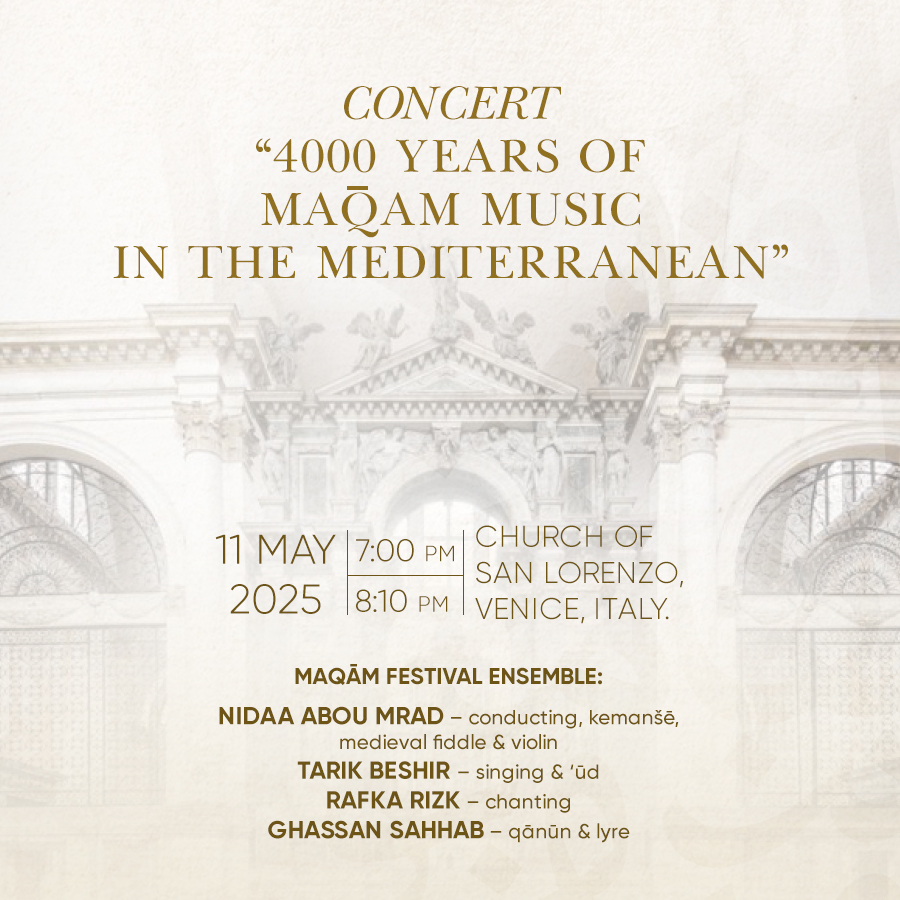
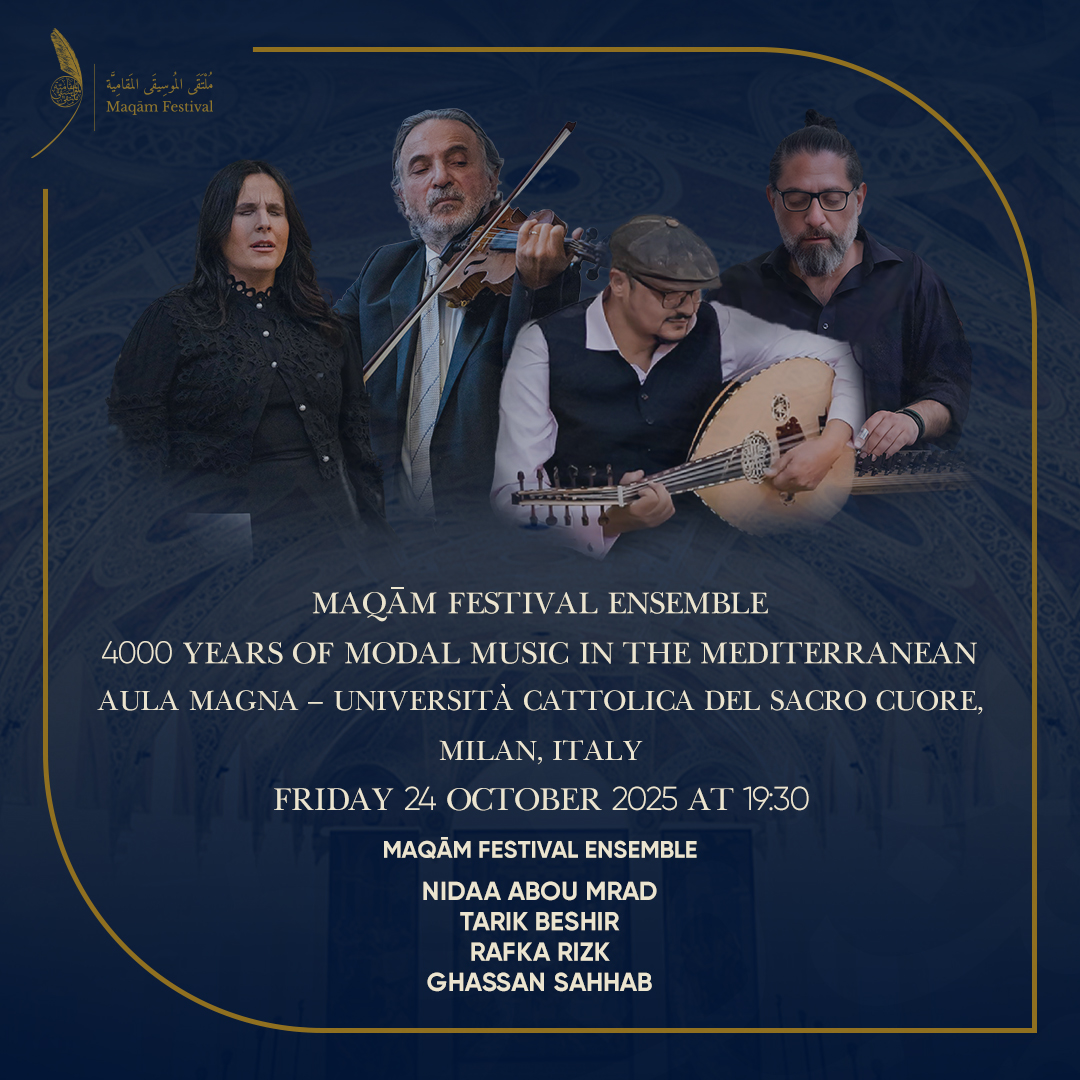
Nidaa Abou Mrad (conducting & violin)
Rafka Rizk (singing & riq)
Ghassan Sahhab (qānūn)
A Common Modal Melodic System
The musical traditions of West Asia, North Africa and Medieval Europe are based on a common modal melodic system. The maqām mode of a traditional musical work provides the melodic alphabet and the typical formulas from which the phrasing is elaborated, at the same time as it colors the emotions conveyed, inducing ecstasy.
If these great traditions converge on the level of this common melodic system, similar to the trunk of a very old tree, their cultural diversity is expressed by the traces that the prosody of the sung languages and the ritual and choreographic gestures, specific to the contextual cultures, leave in their rhythm, thus generating a multitude of traditional musical branches.
The Artistic Tradition of the Mašriq & Its Mystical Dimension
The mystical dimension of this music is underlined by the etymology of the word maqām (degree) borrowed from Sufism and its maqāmāt, ascetic gradations generating aḥwāl, ecstatic states of divine closeness. This illumination is combined with a healing of the soul and the body, as witnessed by the chronicles of the Arab hospitals where sedative music therapy was practiced, as well as an anonymous Arabic musical treatise of the 16th century that teaches the art of healing various pathologies through the ethos (emotional color) of maqām and its cosmological inscription (elemental and humoral) which induce a ṭarab sedative ecstasy or a ṭarab cathartic trance.
HEARTH Summit’s themes — Intergenerational Healing, Ecological Belonging, and Art for Social Change
Our workshop, “Seeking the Spirit of the Maqām,” draws on a shared modal system that connects the musical traditions of West Asia, North Africa, and Medieval Europe. It highlights how reconnecting individuals and communities with their traditional cultural foundations can serve as both a preventative and therapeutic path to deep well-being, a principle deeply aligned with Intergenerational Healing.
The program also engages the theme of Ecological Belonging, inviting participants to rediscover the sonic and cultural relationships shaped by their environment — the kind of listening that restores meaning, identity, and rootedness.
Finally, with Art for Social Change, the Maqām tradition offers a powerful model for societal transformation: a return to endogenous artistic, aesthetic, and spiritual resources that can inspire renewal within communities.
Maqām Festival Ensemble
en.v is a Kuwait-based, interdisciplinary organization dedicated to fostering a more compassionate, connected, and resilient society. Working with a broad network of community groups, institutions, and stakeholders, en.v develops programs and participatory processes that promote informed empathy, critical engagement, and inclusive, equitable approaches to social transformation.
The Wellbeing Project is a global non-profit initiative focused on advancing inner wellbeing for changemakers and the organizations that support them. Co-created with leading social-impact institutions, the project fosters research, partnerships, and community-building efforts that help embed wellbeing as a foundational element of social change.
Programs

مُلْتَقَى المُوسِيقَى المَقامِيَّة
P.O. Box 288
Postal Code 12311 Dokki
Giza, Egypt
Multaqa al-Musiqa al-Maqamiyya LLC
P.O Box 35938, Dubai, UAE
Tel./whatsapp: +20 109 0379090
info@maqamfestival.com
www.maqamfestival.com
©2023-2026 Maqām Festival. All rights reserved.